
 EN
EN
 AR
AR
 BG
BG
 DA
DA
 NL
NL
 FR
FR
 DE
DE
 HI
HI
 IT
IT
 JA
JA
 KO
KO
 NO
NO
 PL
PL
 PT
PT
 RO
RO
 RU
RU
 ES
ES
 SV
SV
 TL
TL
 ID
ID
 SK
SK
 SL
SL
 UK
UK
 VI
VI
 TH
TH
 TR
TR
 MS
MS
 BE
BE
 HY
HY
 AZ
AZ
 KA
KA
 BN
BN
 BS
BS
 EO
EO
 JW
JW
 LO
LO
 MN
MN
 NE
NE
 MY
MY
 KK
KK

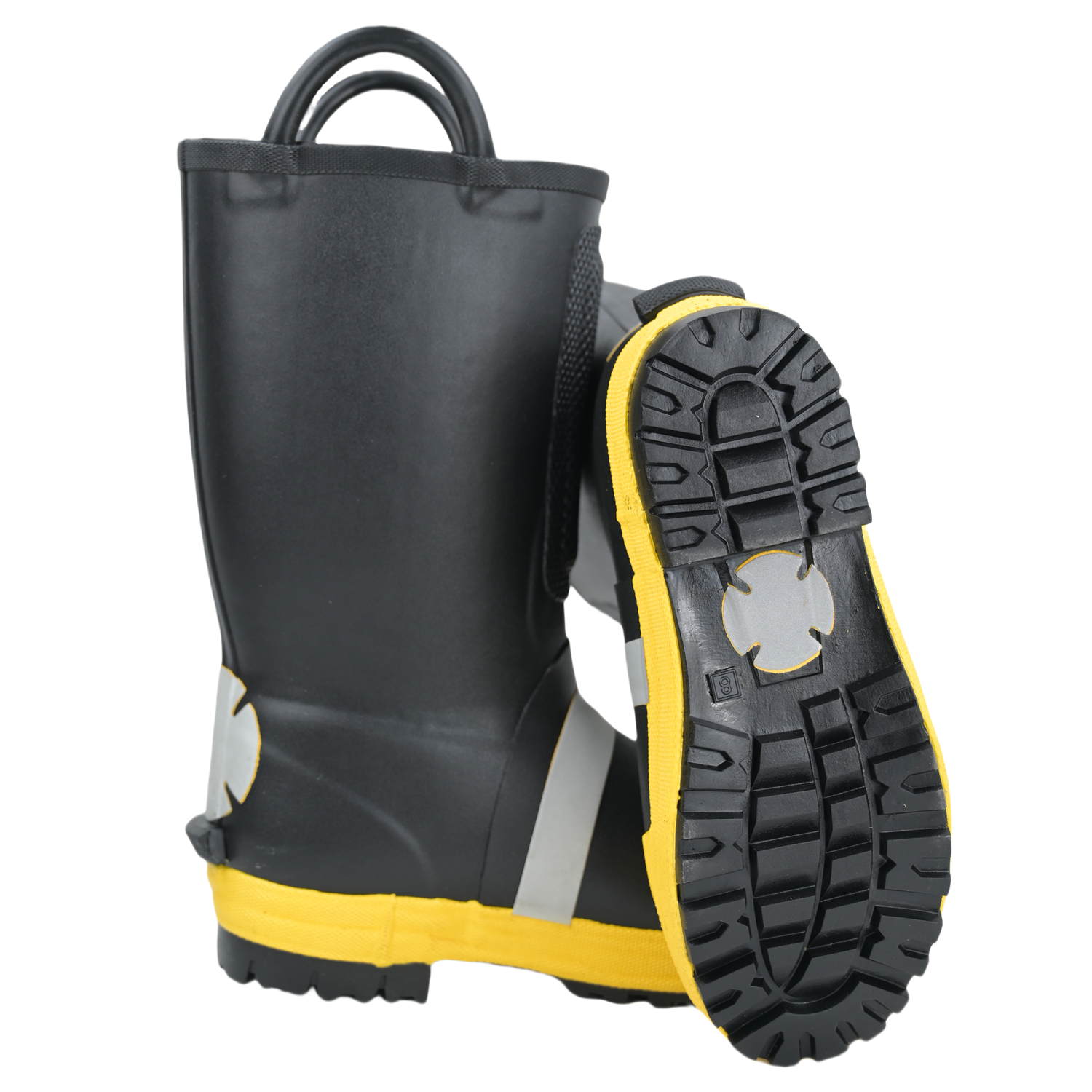
Ask any firefighter about their turnout coat and you'll get opinions. Ask about their boots and you'll usually get a shrug. Then watch them limp off the truck after a long overhaul and you'll understand: boots are the gear everyone forgets until their feet start screaming.
Your feet are the only part of you that's standing in whatever the fire left behind. Broken glass, nails, hot embers, pooled water, and everything else the building decides to drop. The boot is doing more work than it gets credit for.
The toecap conversation. Steel toes are the classic, and they're still everywhere. Composite toes are lighter and don't conduct cold — a real difference when you're standing on a wet apparatus floor in January. Both meet the impact standards. The debate is really about weight and feel. If you're on your feet for twelve-hour shifts, the two-pound savings per foot adds up to a lot of saved energy.
Puncture resistance isn't optional. The sole of a fire boot has to stop a nail going through the bottom of your foot — that's part of NFPA 1971, and it's tested with real force. What people don't realize is that the puncture plate wears out with every step. A boot that's been through two years of heavy use isn't the boot it was on day one. Check the soles regularly. A thin spot you can feel with your thumb is a problem, not a quirk.
Heat goes up, not just in. A good fire boot protects against radiant heat from below and conducted heat from standing on hot surfaces. But the boot also has to let sweat escape, or your feet swim for the whole call. The trade-off between waterproofing and breathability is real. Full rubber boots are bulletproof but bake your feet. Leather station boots breathe but need more care. Know what you're buying before you complain about the other one.
Fit, fit, fit. Fire boots get worn with heavy socks, often in a rush, and they get broken in by people who don't have time to break them in. The result is a lot of firefighters running on boots that don't fit. Your toes should have room to spread; your heel shouldn't lift when you walk. If your boots pinch after an hour, they won't get better with age — they'll get worse, along with your ankles and knees.
The maintenance nobody does. Leather boots need to be cleaned and conditioned, not just hosed off and left to dry in the sun. Wet boots dried fast lose their shape and their protection. Stuff them with newspaper, dry them slowly, and treat the leather a couple of times a year. Rubber boots need their gussets checked for cracks. Five minutes of care per week saves you from buying new boots twice as often.
Boots are the one piece of gear you wear on every call, every training, every station chore. If your feet are comfortable, your whole body works better. If they're not, nothing else feels right either. Give your boots half the attention you give your helmet and they'll carry you twice as far.