
 EN
EN
 AR
AR
 BG
BG
 DA
DA
 NL
NL
 FR
FR
 DE
DE
 HI
HI
 IT
IT
 JA
JA
 KO
KO
 NO
NO
 PL
PL
 PT
PT
 RO
RO
 RU
RU
 ES
ES
 SV
SV
 TL
TL
 ID
ID
 SK
SK
 SL
SL
 UK
UK
 VI
VI
 TH
TH
 TR
TR
 MS
MS
 BE
BE
 HY
HY
 AZ
AZ
 KA
KA
 BN
BN
 BS
BS
 EO
EO
 JW
JW
 LO
LO
 MN
MN
 NE
NE
 MY
MY
 KK
KK

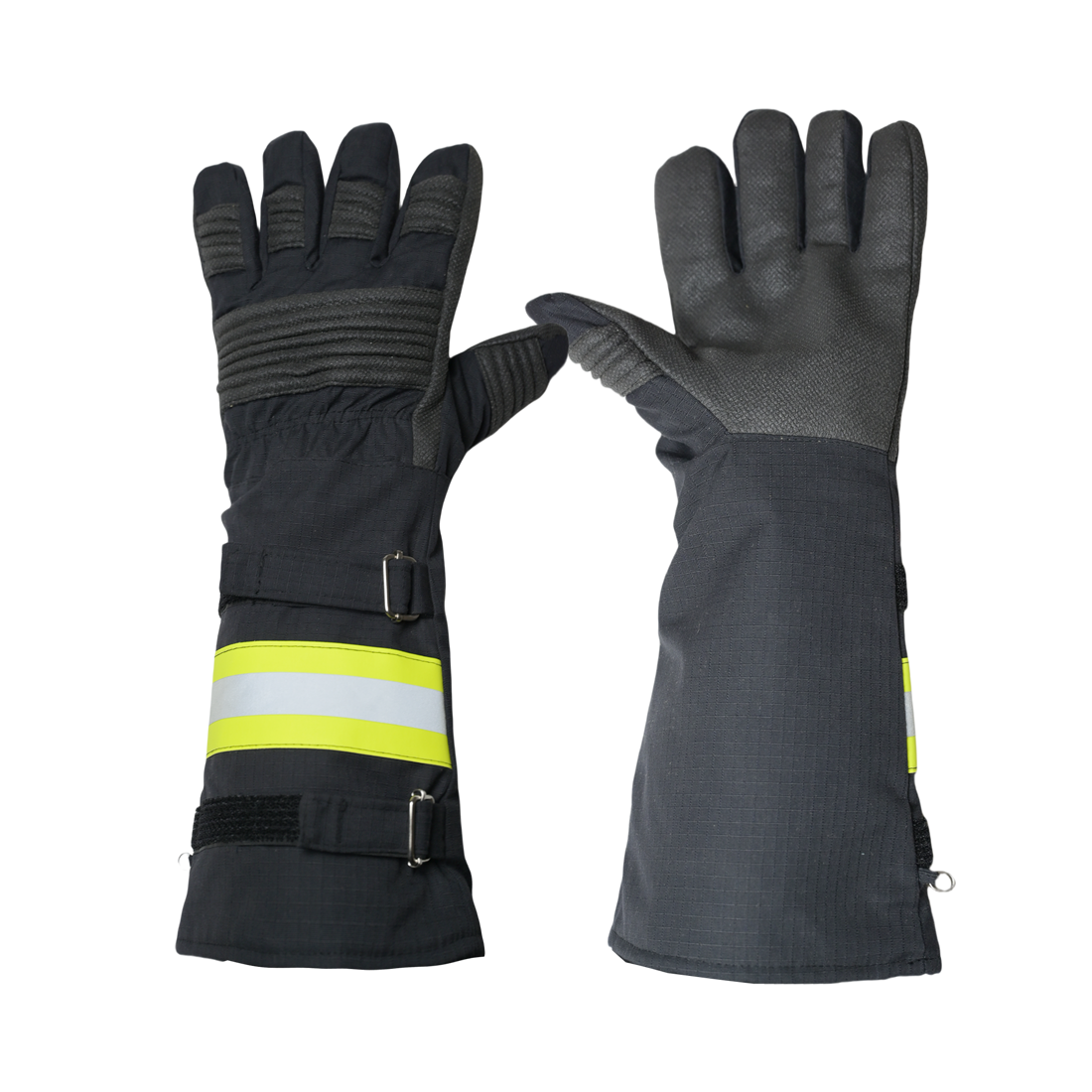
Fire gloves are the smallest piece of PPE on your body and the one you're most likely to misuse. Everyone knows they're supposed to protect your hands. Fewer people talk about what the trade-off actually costs.
Here's the deal: gloves are a battle between protection and dexterity, and you only have two hands. Too much leather, and you can't feel the valve you're trying to turn. Too thin, and you feel everything you shouldn't.
The anatomy matters. A proper fire glove has a tough outer shell — cowhide or goatskin are the classics — a thermal liner inside, and a moisture barrier somewhere in between. NFPA 1971 sets the bar for structural gloves in the US: the glove has to keep your hand functional in heat that would blister skin in seconds. But the standard tests protection, not feel. Two gloves can both pass and feel completely different on your hand.
Dexterity is the part that gets you killed. Watch an experienced firefighter work a hose coupling in heavy gloves and you'll see why they swear by certain brands. The best gloves let you do fine motor tasks — unscrewing a cap, finding a latch in the dark — without stripping them off. The worst gloves turn every simple task into a two-minute struggle. If you have to take your gloves off to do your job, they're not doing theirs.
Sizing is not a suggestion. Gloves that are too big bunch up at the fingertips and cost you grip. Gloves that are too small cut off circulation, and cold, numb fingers fail you faster than any fire. Leather stretches with use, so a glove that's snug at the store is usually right. And yes, they break in. Give a good pair of leather gloves a month of use and they mold to your hands. The first week will feel stiff — that's normal, that's leather.
The quiet killers: sweat and heat. Gloves take a beating that nobody sees. Every time your hands get hot, the leather dries out a little more. Sweat soaks the liner and never fully leaves. Rotate two pairs if you can. Dry them slowly — never on a radiator, never in direct sun. A pair of fire gloves that's cared for can serve you for years; one that's abused is dead in months.
Know when to retire them. Cracks in the leather, melted seams, hard spots where the heat got through — these aren't cosmetic. NFPA says gloves, like the rest of your gear, have a service life. When the leather starts to look like an old baseball mitt that's been through a dryer, it's time. Your hands are the first thing you use on every single call. Treat them accordingly.
Cheap gloves are a false economy. The price difference between a good pair and a bad pair is smaller than the cost of one bad day.