EN
 AR
 BG
 DA
 NL
 FR
 DE
 HI
 IT
 JA
 KO
 NO
 PL
 PT
 RO
 RU
 ES
 SV
 TL
 ID
 SK
 SL
 UK
 VI
 TH
 TR
 MS
 BE
 HY
 AZ
 KA
 BN
 BS
 EO
 JW
 LO
 MN
 NE
 MY
 KK

Inside the Test Cycle: How ANBEN FIRE Develops and Validates Wildland Firefighting Gear
Inside the Test Cycle: How ANBEN FIRE Develops and Validates Wildland Firefighting Gear
Before a wildland suit reaches a fire line, it passes through fabric screening, thermal and mechanical testing, fit trials and live-fire field validation with the crews who will wear it. This is how the ANBEN FIRE forest fire range is built.
October 2026
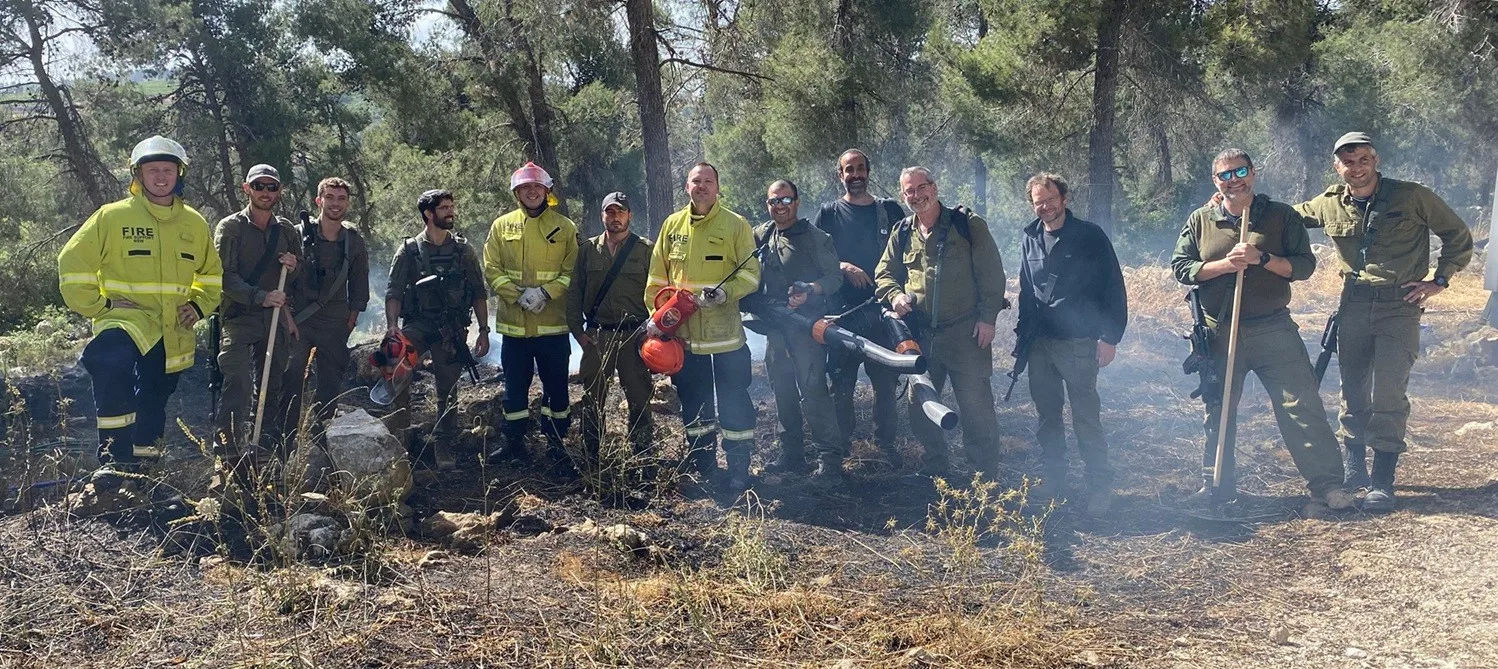
Field validation in a Mediterranean pine stand: ANBEN FIRE wildland suits (hi-vis yellow) alongside partner ground crews after a surface fire was brought under control — the point in the cycle where specification meets terrain.
A wildland firefighter's suit is judged in a place no laboratory can reproduce: a steep pine slope at 38 °C, with a blower throwing embers back into the wearer's face and six hours of shift still ahead. But the decisions that determine whether the suit survives that day are made much earlier — in fabric selection, in bench-scale thermal testing, in fit trials, and in a field protocol that puts prototypes on real fire lines before they are offered to a single buyer.
This is how ANBEN FIRE develops its forest fire range.
Stage one: screening the shell
Wildland clothing is a contradiction to engineer. The garment must resist flame and radiant heat, yet stay light enough that a crew can climb for hours; it must be durable against abrasion from rock, tools and burned stubble, yet remain supple enough to crawl in.
ANBEN FIRE starts from a shortlist of flame-resistant fibre systems — aramid, modacrylic and FR-treated cotton blends — and screens each candidate assembly against the same criteria: limiting oxygen index, char behaviour, afterglow, and how the fabric behaves after repeated industrial laundering rather than in its as-delivered state. A shell that passes in the sample book but degrades at wash 25 is not a wildland shell.
Weight is treated as a design constraint, not a marketing figure. Every gram removed from the outer shell has to be paid for in tear strength or thermal performance somewhere, and the development team tests both sides of that trade rather than quoting the lighter number alone.
Trim is specified separately, because on a forest fire the reflective tape is often the first component to fail: FR reflective trim is tested for retroreflection after heat exposure and laundering, and matched to the shell's shrinkage so that the tape does not pucker or lift at the shoulder after a season of washing.
Stage two: the numbers behind the fabric
Every candidate assembly is sent to accredited third-party laboratories for the test package that a European or Israeli procurement team will expect to see. The results — not the supplier's data sheet — decide whether a material moves forward.
| Property | Test method | Why it matters on a forest fire |
|---|---|---|
| Heat transmission on flame exposure | EN ISO 9151 | Predicts how long a wearer has before second-degree burn under direct flame |
| Radiant heat resistance | EN ISO 6942 | Models exposure to a moving flame front and burning slope above the crew |
| Limited flame spread | EN ISO 15025 | Confirms the fabric self-extinguishes instead of sustaining ignition |
| Convective heat resistance (oven) | EN ISO 17493 | Screens materials for heat-induced shrinkage, melting and ignition |
| Tensile and tear strength | EN ISO 13934-1 / EN ISO 13937-2 | Resistance to snagging on branches, rock and hand tools |
| Seam strength | EN ISO 13935-2 | The seam is where most field failures begin |
| Dimensional change after washing | EN ISO 6330 / ISO 5077 | Keeps fit, trim alignment and protection in place over the garment's life |
| Water vapour resistance (Ret) | EN ISO 11092 | Breathability — the difference between a 6-hour shift and a 3-hour one |
| High-visibility performance | EN ISO 20471 | Crew accountability through smoke and low light |
| Electrostatic dissipative behaviour | EN 1149-5 | Safety around fuel handling and pumping equipment |
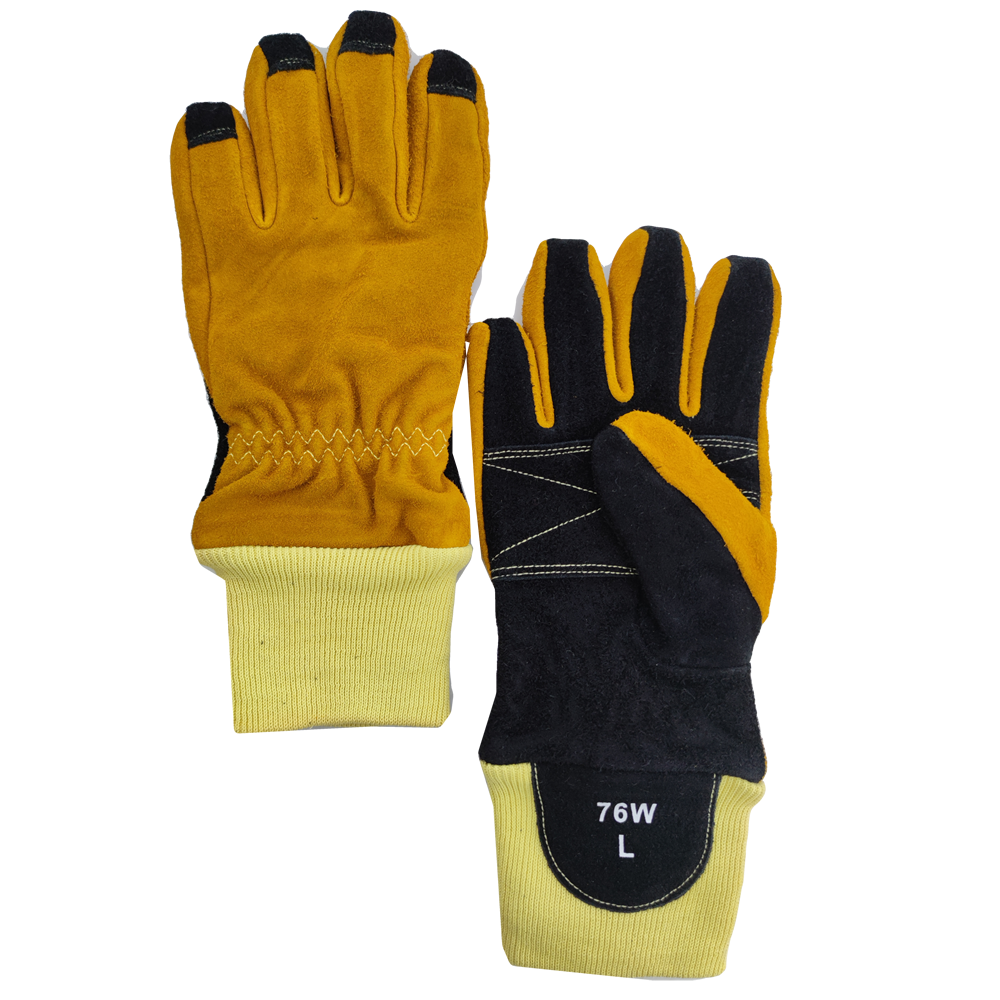
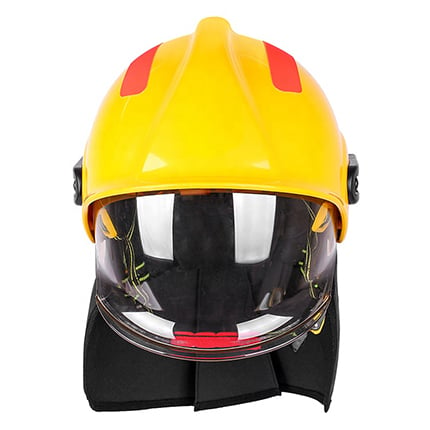
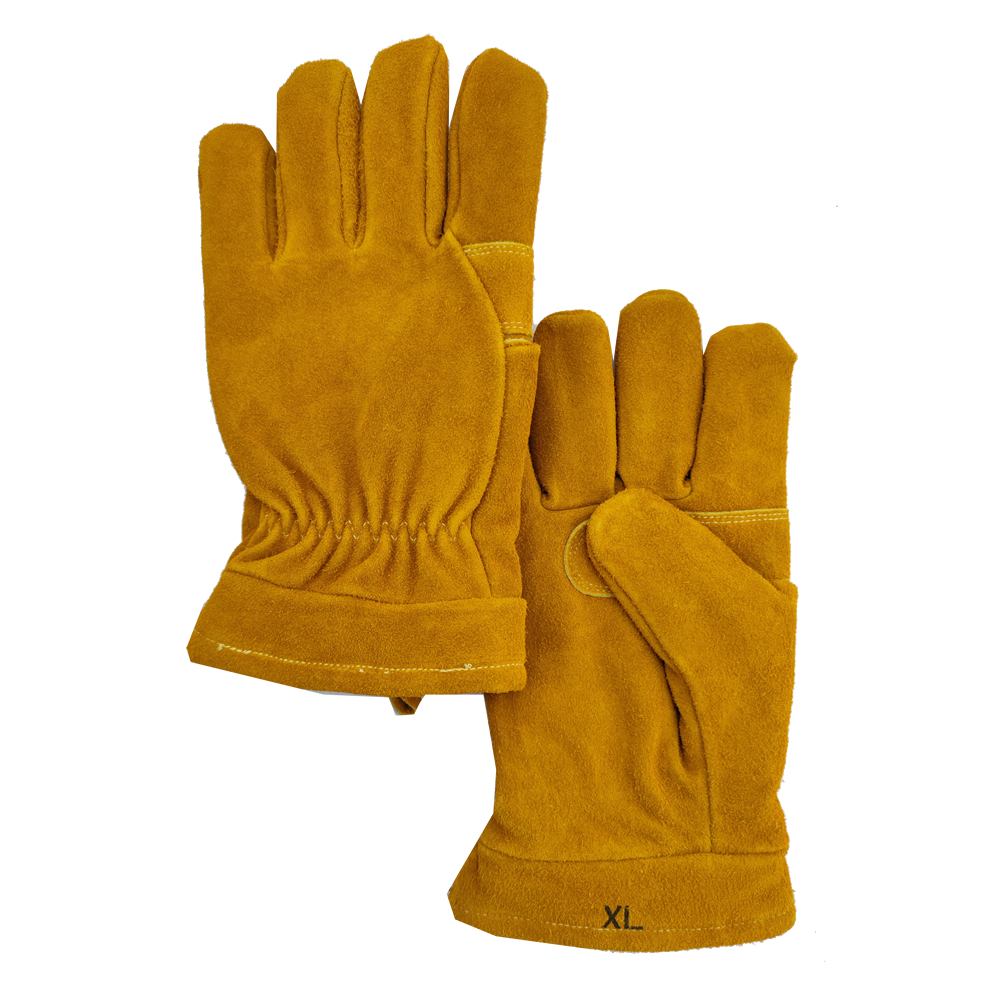
The finished garment is then assessed as a system rather than a set of fabrics: the suit to EN 15614, the hood to EN 13911, the wildland helmet to EN 16471, gloves to EN 659 / EN 388 / EN 407 and boots to EN ISO 20345 and NFPA 1977. Where a customer service works to NFPA rather than EN requirements, the same garment platform is re-validated against that standard instead of being assumed to transfer.
Stage three: the human factors nobody tests for
A garment can pass every bench test and still be unusable. Heat stress, restricted mobility and poor fit are not captured by a fabric test report, so ANBEN FIRE runs a separate ergonomic protocol on production-representative samples:
- Mobility: stepping, kneeling, crawling and overhead reaching in full kit, with the suit checked for hem lift, cuff gap and shoulder restriction.
- Heat load: wear trials in a controlled hot environment, measuring the temperature and humidity that build up between base layer and shell during sustained work.
- Interface fit: hood under helmet, helmet over hood with goggles, glove cuff over or under the sleeve, radio and harness routing clear of pockets.
- Doffing speed: how quickly a fatigued wearer can get out of the suit and boots at the end of a shift — a genuine safety function in a hot climate.
- Laundry and repair: how the garment behaves after repeated wash cycles, and whether a damaged panel can be repaired locally rather than written off.
Feedback from these trials is logged by garment zone — shoulder, knee, cuff, collar — so that a complaint about "the suit getting hot" becomes a specific pattern change rather than a general impression.
Stage four: validation on a real fire line
The final stage is the one shown in the photograph above: prototypes and pre-production garments issued to partner ground crews for use on actual incidents, not staged demonstrations.
In a Mediterranean pine stand, that means the suit is assessed against conditions a lab cannot simulate — ember wash from a blower clearing a break, radiant heat from a slope burning above the crew, abrasion from crawling through burned maquis, and the accumulated fatigue of a multi-hour shift in direct sun. Crews report back on what failed, what held, and what annoyed them; the last category is often the most commercially important, because a small irritation becomes a non-compliance issue after a season.
The loop closes there. Findings return to pattern making and fabric specification, a revised sample is produced, and the cycle repeats before the garment enters the catalogue.
Why this cycle is the product
For distributors and fire services, the practical value of a documented development cycle is traceability. Test reports, material declarations and change records travel with the order, so a procurement team can answer a regulator's question about a specific batch rather than a general claim about a product family.
ANBEN FIRE continues to run this cycle across its wildland range — suit, hood, helmet, gloves, boots and supporting accessories — and to refine it with the crews and partners who use the gear in the field.
About ANBEN FIRE
ANBEN FIRE is a manufacturer and exporter of firefighting and personal protective equipment, supplying fire services, distributors and OEM partners in more than [number] countries. The range covers wildland and structural firefighting clothing, firefighter boots and gloves, hoods and helmets, and supporting accessories — developed and tested to EN, NFPA and ISO requirements.
Recommended Products
Hot News
-
Halligan Crowbar
2024-10-20
-
Argentine Client Visit Fire Equipment Factory
2024-10-30
-
Daily drills of Shanghai Fire Brigade
2024-12-20
-
New-Generation High-Performance Firefighter Helmets Roll Off Production Line, Empowering Global Fire Rescue with Chinese Manufacturing Excellence
2026-04-08
-
ANBENFIRE Equips First-Class Drill: Showcasing Full Range of Professional Firefighting Gear
2026-04-08