
 EN
EN
 AR
AR
 BG
BG
 DA
DA
 NL
NL
 FR
FR
 DE
DE
 HI
HI
 IT
IT
 JA
JA
 KO
KO
 NO
NO
 PL
PL
 PT
PT
 RO
RO
 RU
RU
 ES
ES
 SV
SV
 TL
TL
 ID
ID
 SK
SK
 SL
SL
 UK
UK
 VI
VI
 TH
TH
 TR
TR
 MS
MS
 BE
BE
 HY
HY
 AZ
AZ
 KA
KA
 BN
BN
 BS
BS
 EO
EO
 JW
JW
 LO
LO
 MN
MN
 NE
NE
 MY
MY
 KK
KK

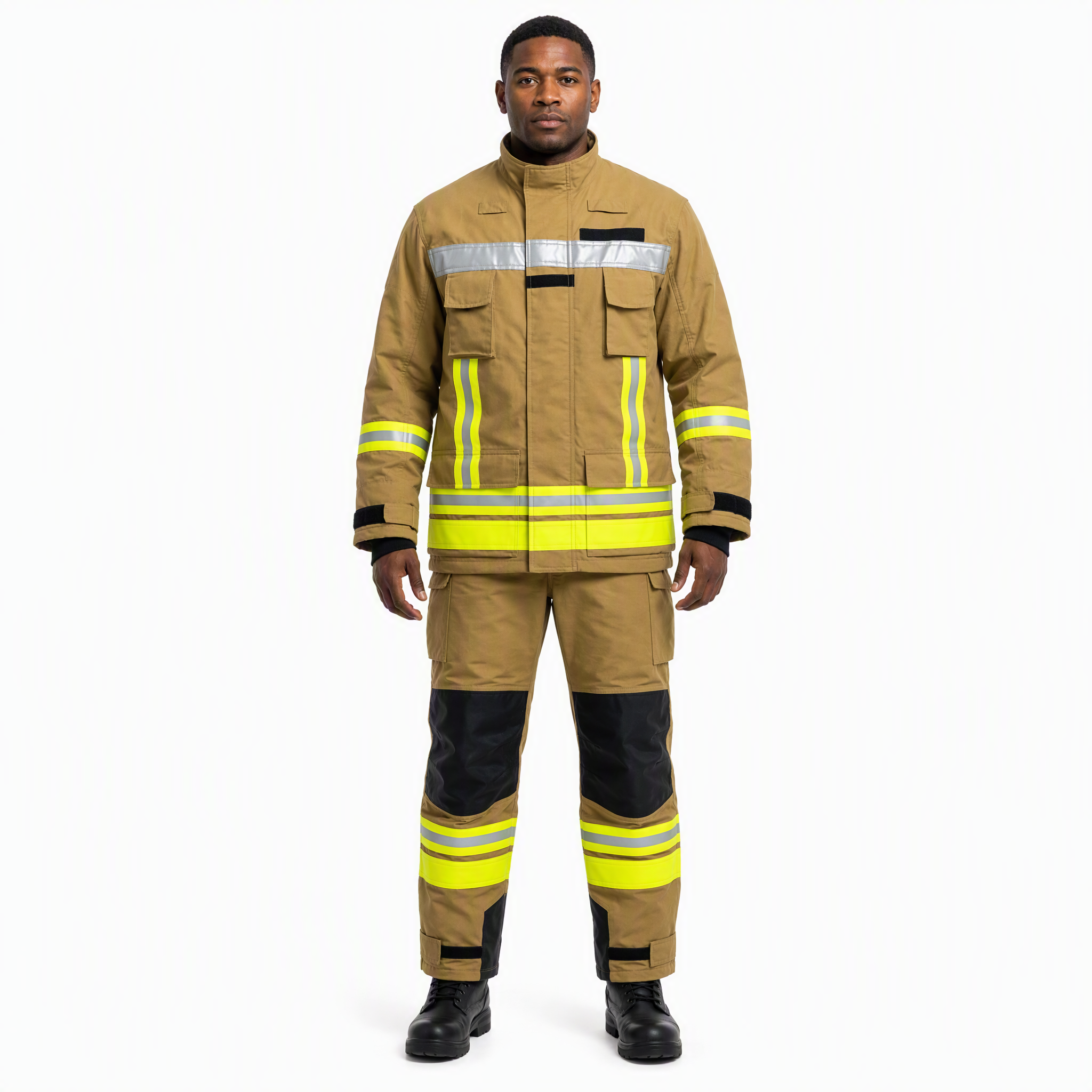
Nobody walks into the fire service expecting cheap clothes. But the first time you see the invoice for a full set of turnout gear, it still stings. Three grand for a jacket and pants? Four, once you add the extras? Before you assume someone's getting rich, take a look inside the layers. There's a reason this stuff costs like a used car.
Your turnout gear is a three-layer sandwich, and every layer is doing a different job.
The outer shell takes the heat first. Most modern shells are woven from aramid fibers — Nomex is the one everyone knows, but there are plenty of cousins with different letters in the name. The shell doesn't melt, doesn't drip, and won't ignite easily. That's the layer that buys you the two or three extra minutes to get out of a bad spot.
Under that sits the moisture barrier. Sounds boring, but it's the layer that decides whether you finish the call soaked and steaming, or dry enough to keep going. It stops water and chemicals from reaching your skin while letting sweat escape — a balance that's harder to engineer than it sounds. If the moisture barrier fails, the whole suit might as well be a raincoat.
The thermal liner is the last line of defense. It's the insulation that keeps the heat of a burning room from becoming the heat of your own skin. Get it right and you can work in temperatures that would cook a steak. Get it wrong and you're betting your body on a few millimeters of fabric.
Then there's everything the NFPA 1971 standard demands on top: reflective trim that has to survive wash cycles, wristlets, drag rescue devices, and hardware that won't corrode after being soaked in whatever the fire left behind. Every one of those pieces gets tested, and testing costs money — the kind of money that shows up in your department's budget meeting.
Here's the part nobody likes to talk about: gear doesn't last forever. NFPA puts the service life of a turnout set around ten years, but if you've spent any time in a burn building, you know the real clock runs shorter. The fabric degrades every time it's exposed to heat and UV. That's not a conspiracy — it's chemistry.
So when you're shopping for a new set, whether you're a department buyer or a volunteer who pays out of pocket, don't just compare prices. Compare layers. Ask what the outer shell is made of, what the moisture barrier is rated for, and who actually sewed the seams. The stitching is where cheap gear comes apart first.
A suit is only as good as the day you need it most. That day is coming. It always is.