
 EN
EN
 AR
AR
 BG
BG
 DA
DA
 NL
NL
 FR
FR
 DE
DE
 HI
HI
 IT
IT
 JA
JA
 KO
KO
 NO
NO
 PL
PL
 PT
PT
 RO
RO
 RU
RU
 ES
ES
 SV
SV
 TL
TL
 ID
ID
 SK
SK
 SL
SL
 UK
UK
 VI
VI
 TH
TH
 TR
TR
 MS
MS
 BE
BE
 HY
HY
 AZ
AZ
 KA
KA
 BN
BN
 BS
BS
 EO
EO
 JW
JW
 LO
LO
 MN
MN
 NE
NE
 MY
MY
 KK
KK

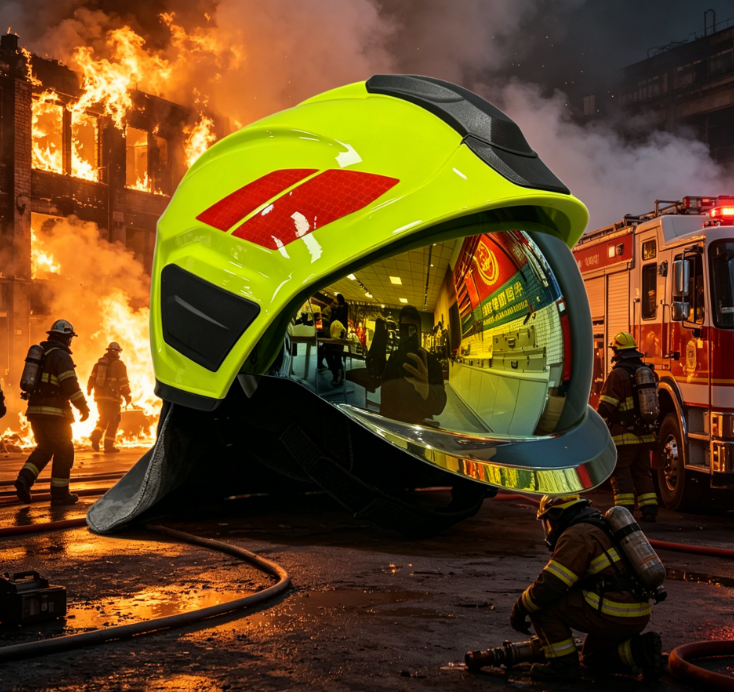
Many buyers only focus on the appearance and price of fire helmet products while ignoring core safety standards, which is the biggest hidden danger in fire protection equipment procurement. Professional fire helmet safety standards are formulated based on countless fire accident data and rescue scene tests, strictly regulating the heat resistance, impact resistance, penetration resistance, and flame retardancy of fire helmets.
The most authoritative standard for global fire helmets is NFPA 1971, which covers all performance indicators of structural fire fighting helmets. A qualified NFPA certified fire helmet can withstand high temperatures above 500°F in a short time, effectively blocking flame radiation heat and preventing scalp burns. In terms of impact resistance, it can absorb strong impact energy from falling bricks, steel parts, and debris, avoiding skull injury for firefighters.
The fire helmet protection performance is also reflected in detailed anti-risk designs. Professional fire helmets adopt fully enclosed flame-retardant neck protection structures to prevent high-temperature smoke and sparks from burning the neck skin. The anti-penetration shell can resist sharp objects such as broken glass and steel nails, solving the safety loopholes of ordinary helmets. In addition, the waterproof and smoke-proof design ensures stable performance in humid and smoky fire scenes without deformation or damage.
Non-certified ordinary helmets often cut corners on materials and structures. They are unable to resist high-temperature baking and strong impact, and may even crack or melt in fire scenes, bringing secondary injuries to rescuers. For fire stations, industrial enterprises, and emergency rescue teams, purchasing professional fire helmet products that meet national and international standards is not only a basic safety requirement but also a necessary guarantee for the life safety of employees.
It is worth noting that fire helmet safety standards are constantly updated with technological progress. Regularly replacing old equipment and upgrading to standard compliant fire helmets can keep up with the latest safety protection requirements and adapt to increasingly complex fire rescue scenarios.